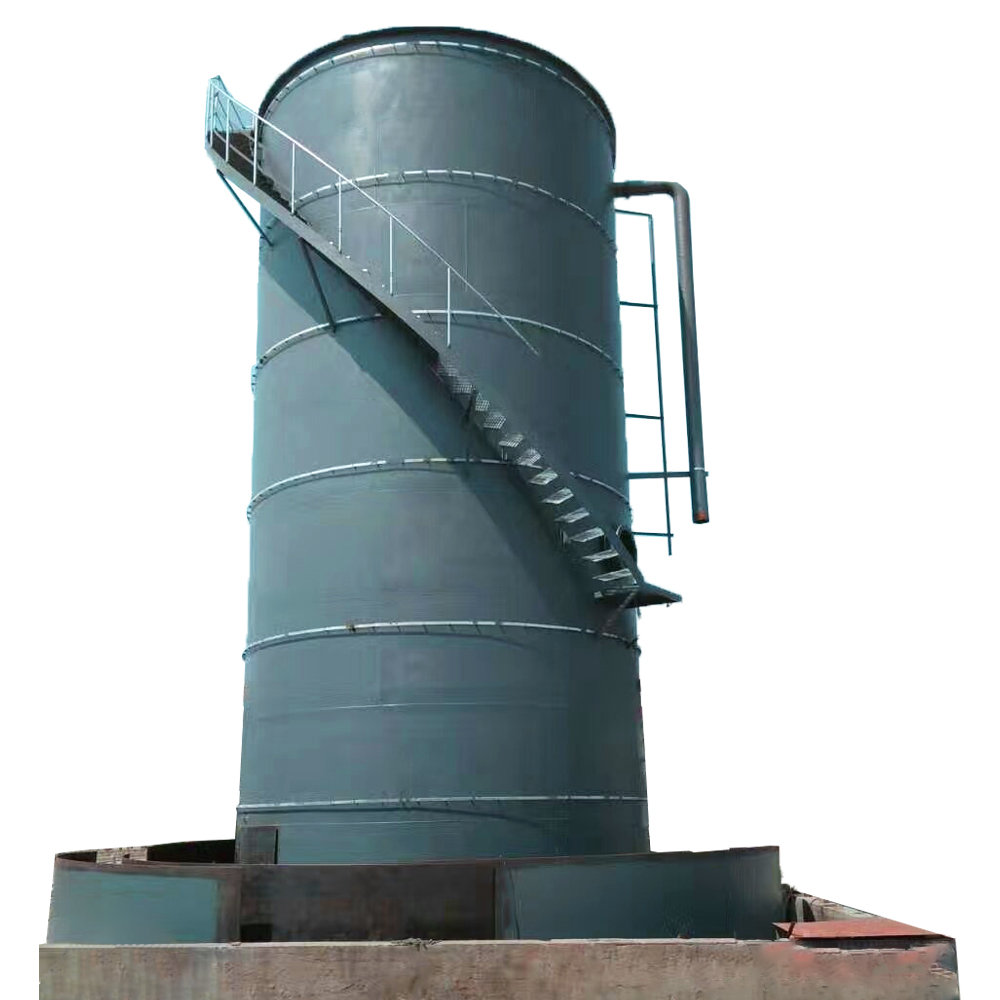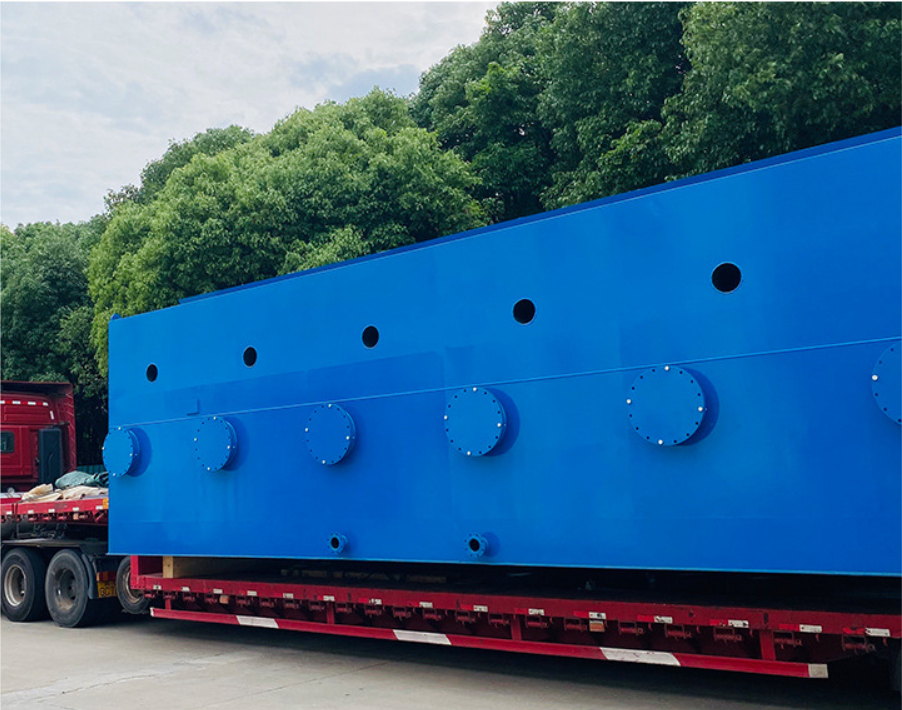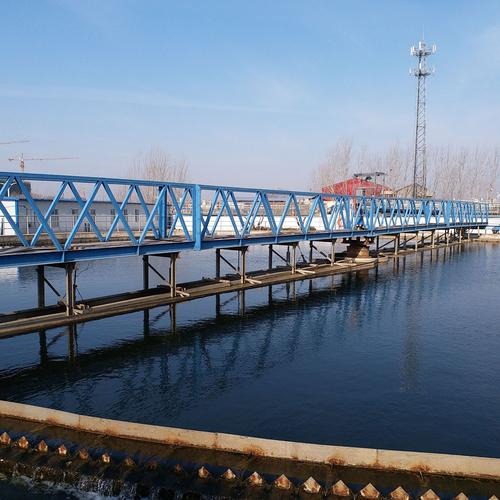
Efficient sedimentation tanks have shown wide application value in various fields such as municipal, industrial, and emergency treatment due to their efficient solid-liquid separation ability, compact structural design, and flexible operating mode. The following are its core application scenarios and specific cases:
1、 Municipal sewage treatment field
Upgrading and renovation of sewage treatment plants
Scenario requirement: Traditional sedimentation tanks cannot meet Class A or stricter emission standards (such as SS ≤ 10mg/L, TP ≤ 0.5mg/L).
Efficient sedimentation tank function: Through carrier flocculation and inclined tube sedimentation, it enhances the removal of SS and phosphorus. For example, after the renovation of the Qiaodong Sewage Treatment Plant in Shijiazhuang, the effluent SS decreased from 30mg/L to 8mg/L, and TP decreased from 1.5mg/L to 0.3mg/L.
Advantages: Reduce land area by 50% and shorten hydraulic retention time to less than 40 minutes.
Deep treatment and reuse of reclaimed water
Scenario requirement: Upgrade the secondary effluent to the standard for reuse water (such as urban miscellaneous water, industrial cooling water).
Efficient sedimentation tank function: Used in combination with ozone oxidation, activated carbon adsorption, or ultrafiltration membrane to further reduce turbidity (≤ 3NTU) and organic matter (COD ≤ 30mg/L).
Case: Tianjin Jinbin Water Plant adopts the process of “pre ozone+high-efficiency sedimentation tank+sand filtration”, and the effluent meets the “Sanitary Standards for Drinking Water” for urban greening and road spraying.
Control of combined sewer overflow pollution
Scenario requirement: During the rainy season, combined sewer overflow causes pollution to the receiving water body.
Efficient sedimentation tank function: Quickly intercept suspended solids and phosphorus in overflow sewage, reducing the impact load on the river.
Advantages: Fast start-up (full load operation within 10 minutes), strong impact resistance (inlet SS can reach 1000mg/L).
2、 Industrial wastewater treatment field
High concentration organic wastewater treatment
Scenario requirements: High SS (500-2000mg/L) and COD (1000-5000mg/L) in wastewater from industries such as papermaking, printing and dyeing, and food processing.
Efficient sedimentation tank function: During the pretreatment stage, it removes most of the suspended solids and colloidal substances, reducing the subsequent biochemical treatment load.
Case: A printing and dyeing wastewater treatment plant in Shaoxing adopts an efficient sedimentation tank, and the effluent SS is reduced from 800mg/L to below 150mg/L, with a COD removal rate of 40%.
Heavy metal wastewater treatment
Scenario requirements: Wastewater from industries such as electroplating and mining contains heavy metals (such as Cu, Zn, Pb) and suspended solids.
Efficient sedimentation tank function: By adding lime or sodium sulfide, heavy metal hydroxides or sulfides precipitate, combined with carrier flocculation to enhance removal.
Advantages: Heavy metal removal rate ≥ 95%, effluent meets the Comprehensive Wastewater Discharge Standard (GB 8978-1996).
Coal chemical wastewater treatment
Scenario requirement: Coal to gas and coal to oil wastewater contains high concentrations of coal powder, oil, and phenolic substances.
Efficient sedimentation tank function: Add micro sand or magnetic powder as a carrier to enhance the coagulation and sedimentation of coal powder and oil droplets, while removing some phenolic substances.
Case: A coal chemical project in Inner Mongolia adopts a magnetic powder high-efficiency sedimentation tank, and the effluent SS is reduced from 300mg/L to below 30mg/L.
3、 In the field of drinking water purification
Low temperature and low turbidity water treatment
Scenario requirement: Reservoir water or groundwater in northern winter, with low water temperature (4-10 ℃) and low turbidity (5-20NTU), and poor treatment effect of traditional processes.
Efficient sedimentation tank function: Compensate for the slow growth of flocs caused by low temperature through carrier flocculation, and improve sedimentation efficiency.
Case: A water plant in Beijing adopts a micro sand high-efficiency sedimentation tank, and the turbidity of the effluent remains stable below 2NTU in winter.
High algae water treatment
Scenario requirement: In summer, there is a large proliferation of algae in lakes and reservoirs, leading to a fishy odor and increased chlorine consumption in the effluent.
Efficient sedimentation tank function: Combined with pre oxidation (such as potassium permanganate) or biological pretreatment, it enhances algal flocculation and sedimentation.
Advantages: Algae removal rate ≥ 90%, reducing the generation of subsequent disinfection by-products.
Emergency drinking water treatment
Scenario requirement: After natural disasters such as floods and earthquakes, water sources are contaminated by sediment and microorganisms.
Efficient sedimentation tank function: rapid deployment (modular design), emergency water supply is achieved by adding coagulants and disinfectants.
Case: After the Wenchuan earthquake, a mobile high-efficiency sedimentation tank restored water supply to some areas within 48 hours.
4、 Special wastewater treatment field
Fluorine containing wastewater treatment
Scenario requirement: Wastewater from the photovoltaic and electronics industries containing fluorides (such as HF and NaF) must meet emission standards (≤ 10mg/L).
Efficient sedimentation tank function: Adding calcium salts (such as CaCl ₂) to form CaF ₂ precipitate, combined with carrier flocculation to improve removal efficiency.
Advantages: Fluoride removal rate ≥ 95%, stable effluent meets standards.
Oil containing wastewater treatment
Scenario requirements: Wastewater from mechanical processing and catering industries contains emulsified oil and suspended oil.
Function of high-efficiency sedimentation tank: After pre-treatment with air flotation or demulsifier, the high-efficiency sedimentation tank further removes residual oil droplets and suspended solids.
Case: A certain automobile manufacturing plant adopts the “air flotation+high-efficiency sedimentation tank” process, and the oil content in the effluent is reduced from 200mg/L to below 5mg/L.
5、 Emergency and Mobile Handling Scenarios
Mine water treatment
Scenario requirement: Coal mining wastewater contains high concentrations of suspended solids (SS up to 5000mg/L) and coal powder.
Efficient sedimentation tank function: Add polyacrylamide (PAM) and micro sand to quickly remove suspended solids and achieve water recycling.
Advantages: High processing efficiency (SS removal rate ≥ 98%), movable equipment, suitable for mining environment.
Construction site wastewater treatment
Scenario requirement: Construction wastewater containing sediment, cement slurry, etc. needs to be recycled or discharged in compliance with standards.
Efficient sedimentation tank function: modular design, quick installation, and removal of suspended solids through flocculation sedimentation.
Case: A construction site in Xiong’an New Area adopts a mobile high-efficiency sedimentation tank, which reduces the effluent SS from 2000mg/L to below 50mg/L for concrete mixing.
6、 Combination application with other processes
Efficient sedimentation tank+membrane filtration
Scenario requirement: Production of high-quality recycled water (such as electronic grade water, boiler feedwater).
Function: The high-efficiency sedimentation tank serves as a pretreatment to reduce the risk of membrane fouling and extend the lifespan of the membrane.
Case: A semiconductor factory adopts the “high-efficiency sedimentation tank+ultrafiltration+reverse osmosis” process, with effluent conductivity ≤ 1 μ S/cm.
Efficient sedimentation tank+artificial wetland
Scenario requirement: Rural decentralized sewage treatment, balancing purification and ecological restoration.
Function: Efficient sedimentation tank removes most pollutants, further purifies wetlands, and enhances landscape value.
Advantages: Low operating costs (0.2-0.5 yuan/ton), suitable for areas lacking professional operations.