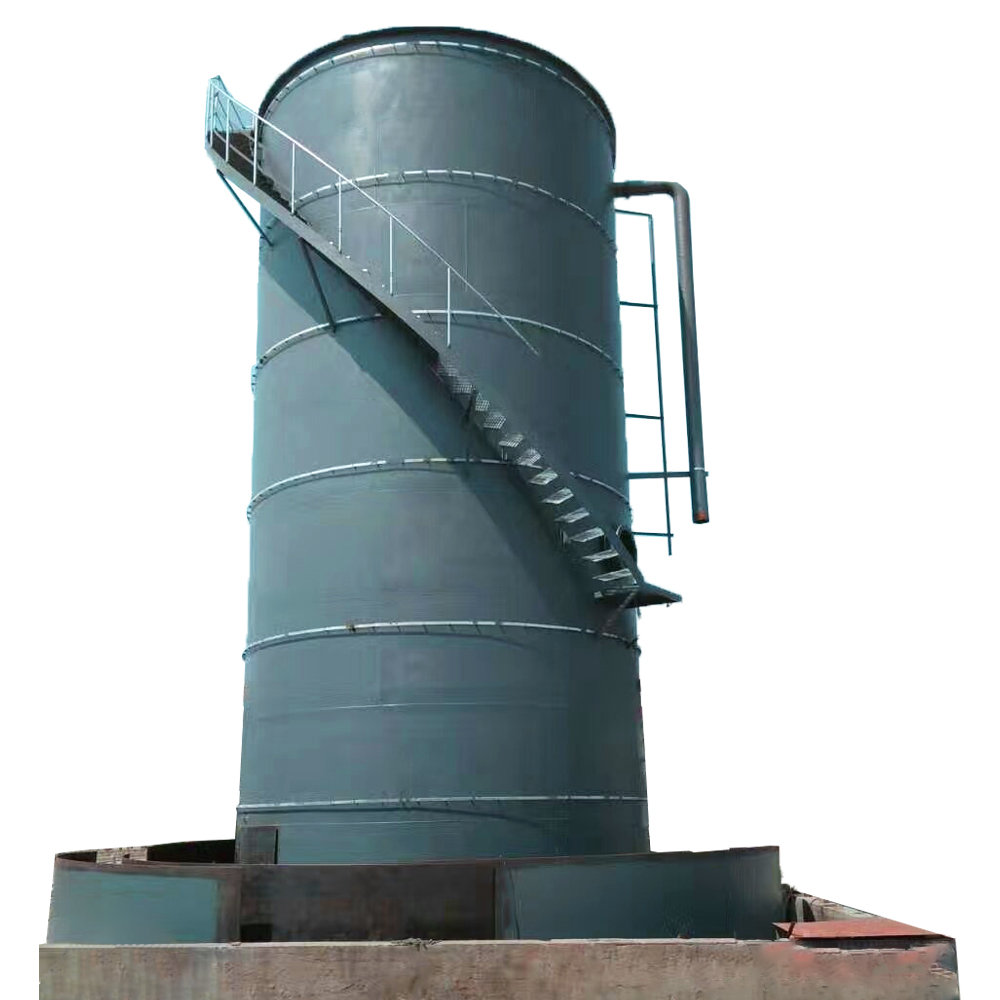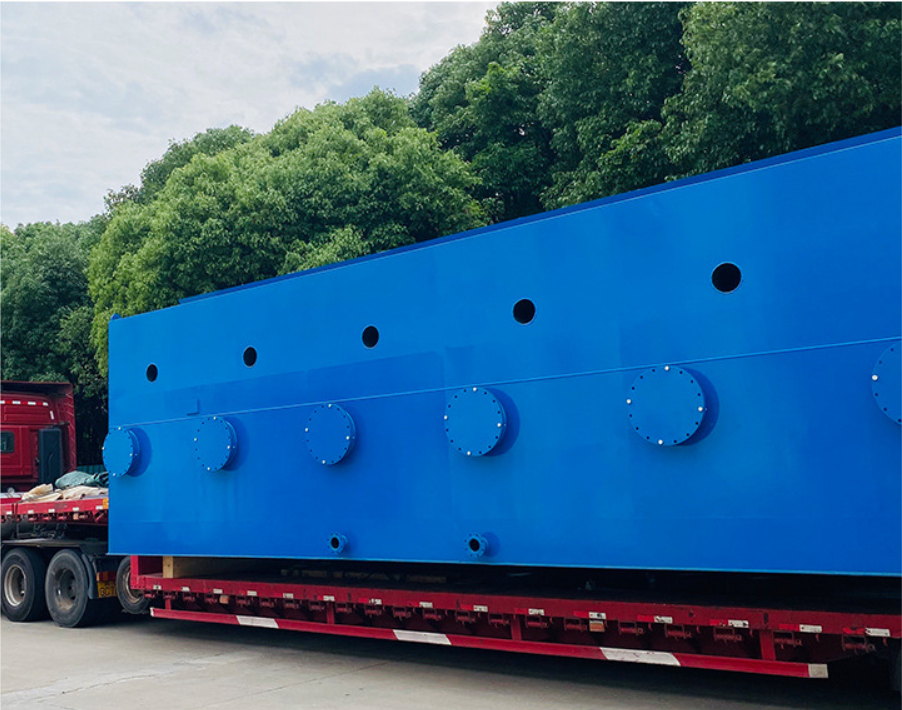

The high-efficiency sedimentation tank combines carrier flocculation technology with shallow sedimentation principle, and achieves efficient solid-liquid separation by optimizing water flow conditions and reaction kinetics. Its technical principle can be summarized as the following core points:
1、 Carrier flocculation technology: accelerating floc growth and precipitation
High density medium addition
During the coagulation stage, high-density insoluble media (such as fine sand and magnetic powder) are added to accelerate the growth of flocs by utilizing their gravitational settling and carrier adsorption effects. For example, Veolia’s Actiflo process uses micro sand as the core to form dense flocs, increasing sedimentation rate by 3-5 times.
Sludge circulation enhanced flocculation
Through the sludge reflux system, the concentrated sludge (containing high concentration activated flocs) at the bottom of the sedimentation tank is refluxed to the flocculation zone, maintaining a suspended solids concentration of 3000-5000mg/L in the reaction zone. This “contact flocculation” mechanism significantly improves floc density and settling performance, especially suitable for high load or water quality fluctuation scenarios.
Layered flocculation design
Rapid mixing zone: By high-speed mixing (speed gradient G=500-1000s ⁻¹), the coagulant and raw water are rapidly mixed to form initial micro flocs.
Slow mixing zone: Reduce the mixing intensity (G=30-60s ⁻¹), add coagulant aids (such as PAM), promote the aggregation of micro flocs into large and dense alum flowers, and avoid floc breakage.
2、 Shallow sedimentation principle: Shorten the sedimentation path and improve treatment efficiency
Diagonal pipe/inclined plate design
Based on the Ha Zhen shallow sedimentation theory, inclined tube (plate) modules are installed in the sedimentation zone to increase the sedimentation area and shorten the particle settling distance. The inclined tube has an inclination angle of 60 ° -75 °, a length of 1m, a diameter of 50-80mm, and a surface load of 15-30m ³/(m ² · h), which is more than 6 times that of traditional processes.
Self scraping effect and anti clogging
The water flow inside the inclined tube is upward, and the flocs slide down along the surface of the inclined tube under the action of gravity, forming a continuous self scraping process to prevent the accumulation of floc volume. At the same time, the inclined tube design reduces the impact of water turbulence on the settled flocs, ensuring sedimentation stability.
Layered sedimentation and sludge concentration
Pre settling zone: Large particle flocs settle rapidly, reducing the load on the inclined pipe area.
Slant tube sedimentation zone: The remaining tiny flocs are captured by the slanted tube, completing the final sedimentation.
Concentration zone: The bottom sludge is concentrated by a scraper or gravity to increase the solid content (20-30g/L) and reduce the amount of subsequent treatment.
3、 Collaboration between process flow and equipment
reaction zone
Mixing reaction zone: Add coagulant (such as PAC) and mix quickly with a stirrer to form micro flocs.
Push flow reaction zone: Micro flocs aggregate into large alum flowers under slow stirring and sludge reflux.
Guide tube and axial flow agitator: optimize the water flow path to ensure uniform flocculation.
Sedimentation zone
Diagonal tube module: using ethylene propylene copolymer honeycomb inclined tubes with a spacing of 80mm and a surface load of 10.2-35m ³/(m ² · h).
Collecting tank: distributed at the top of the inclined pipe, collecting clear water and discharging it to the subsequent treatment unit.
Scraper: center drive type, outer edge linear velocity of 0.04-0.07m/s, to prevent sludge compaction.
Sludge reflux and discharge system
Sludge circulation pump: Return 5% -10% concentrated sludge to the reaction zone to maintain the required sludge concentration for flocculation.
Excess sludge pump: discharge excess sludge, control the elevation of the sludge bed, and avoid fermentation.
Mud level detection and automatic control: By monitoring the sludge concentration through a mud level meter, precise adjustment of sludge discharge volume can be achieved.
4、 Technical advantages and application scenarios
efficiency
High surface load (15-30m ³/(m ² · h)), short hydraulic retention time (39 minutes), and occupying only 20% -25% of the traditional process area.
Strong impact resistance, insensitive to fluctuations in inlet flow rate (± 30%) and turbidity (50-1500NTU).
Excellent effluent quality
Turbidity ≤ 10NTU, SS removal rate ≥ 90%, phosphorus removal rate ≥ 85%, meeting Class A emission standards or drinking water standards.
Flexible operation
The sludge reflux rate can be adjusted (5% -10%) to adapt to different water quality conditions.
The device is easy to start and stop, and has strong ability to handle changes in traffic flow.
Application scenarios
Municipal sewage treatment: upgrading and renovation, advanced treatment, and reuse of reclaimed water.
Industrial wastewater treatment: pre-treatment of high concentration wastewater (such as printing and dyeing, coal mine wastewater).
Drinking water purification: treatment of low-temperature, low turbidity water and high algae water.