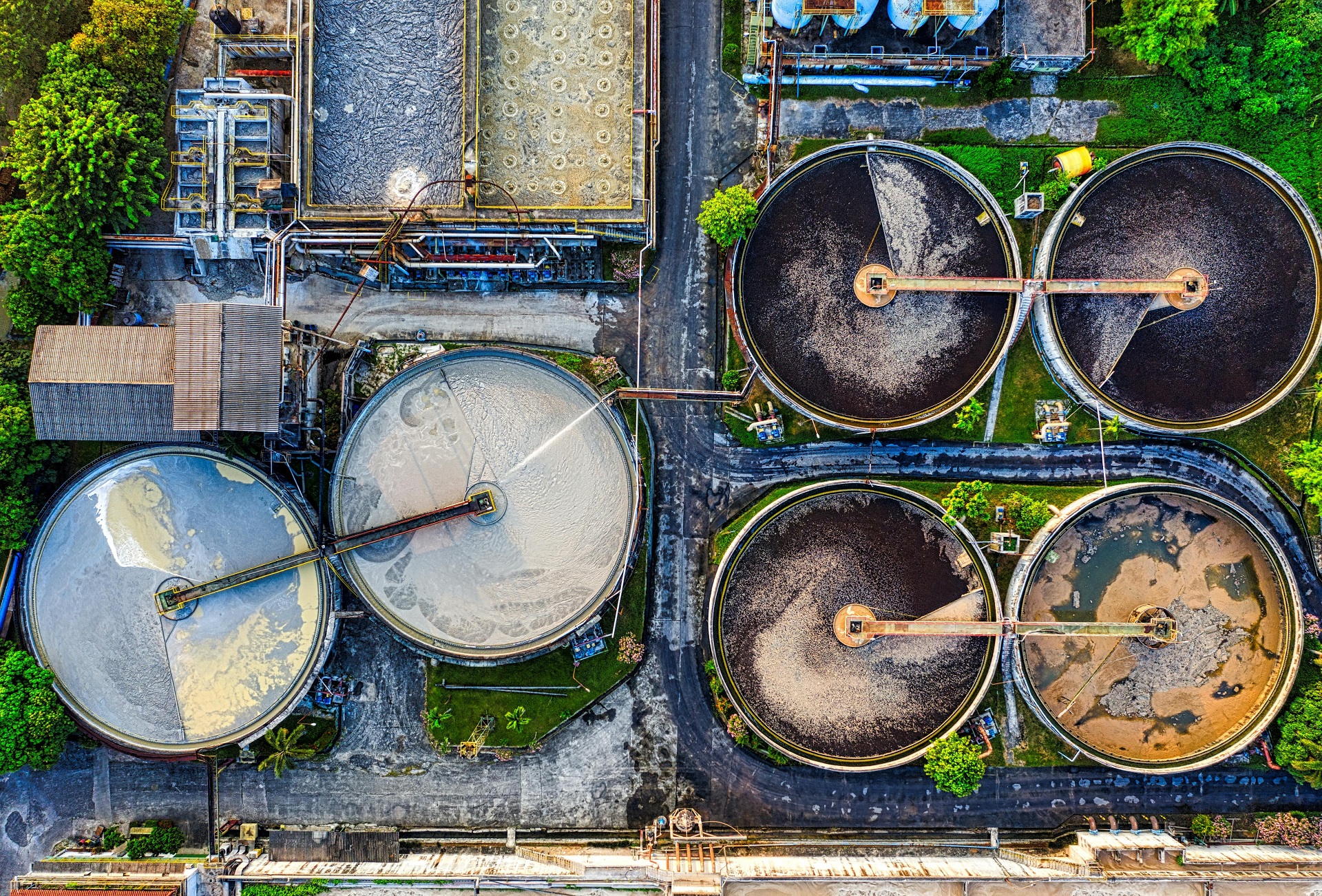
1. Source, Properties and Main Indicators of Sludge According to the differences in the main components contained, there are two types: sludge and sediment. Sludge, which mainly consists of organic matter, is characterized by a high organic content, easy decomposition and odor, fine particles, relatively low specific gravity, high water content, and difficulty in dehydration. It has a gel-like structure and is hydrophilic, making it easy to transport through pipelines. For example, the sludge discharged from the primary sedimentation tank and the secondary sedimentation tank.Sediment, which mainly consists of inorganic matter, is characterized by coarser particles, higher specific gravity, lower water content, and ease of dehydration, but has poor flowability and is difficult to transport through pipelines. This includes sludge discharged from sand traps and settling tanks.
2.According to the source of generation, sludge can be divided into three types:
1) Primary Sedimentation Sludge: This comes from the primary sedimentation tank and its properties vary with the composition of the wastewater.
2) Humic Sludge and Residual Activated Sludge: These are derived from secondary sedimentation tanks following the biological film method and the activated sludge method.
3) Digested Sludge: This is the sludge obtained after the digestion of primary sedimentation sludge, humic sludge, and residual activated sludge, also known as digested sludge. Characteristics: Low organic content and easy dehydration.The main parameters or items that characterize the properties of sludge include: moisture content and solids content, specific gravity, volatile solids, fertilizer components of sludge, microbial composition of sludge, etc.
1) Moisture Content and Solids ContentMoisture content is the percentage of water content in the sludge, while solids content is the percentage of solid or dry mud content in the sludge. The moisture content of sludge is relatively high, with a specific gravity close to 1. When the moisture content is above 85%, it is in a fluid state; when it is between 65% and 85%, it is in a plastic state; and below 60%, it is in a solid state.
2) Specific Gravity of SludgeThe specific gravity of sludge is the ratio of the mass of the sludge to the mass of the same volume of water, where the mass of sludge is the sum of the mass of the contained moisture and the mass of dry solids.
3) Volatile Solids Volatile solids (represented by VSS) refer to that portion of solids in sludge that can be burned in a furnace at 600°C and released as gas. This approximately represents the organic content of the sludge. The VSS content in the primary settling tank is about 65%, while in activated sludge and biological films, it is about 75%.
4) Fertilizer Components of SludgeSludge contains nitrogen, phosphorus, potassium, and other trace elements necessary for plant growth.
5) Microbial Composition of Sludge.
3. Moisture in Sludge and Its Impact on Sludge TreatmentThere are generally four forms of water present in sludge:> Pore WaterWater that exists in the gaps between sludge particles is referred to as pore water or free water, accounting for about 70% of the moisture in sludge. This portion of water can generally be separated from the sludge particles with external force.> Capillary WaterWater that exists in the capillaries between sludge particles is called capillary water, making up about 20% of the moisture in sludge. It can also potentially be separated by physical methods.> Adsorbed Water and Internal WaterWater that is adhered to the surface of sludge particles (adsorbed water) and water that exists within the particles (including water inside biological cells), accounts for approximately 10% of the moisture in sludge. It can only be separated through drying, but not completely.
4. Storage and Transportation of Sludge(1) Storage of SludgeThe function of sludge storage is to balance fluctuations in sludge production and to provide uniform feeding conditions for sludge treatment facilities. Aeration and mixing can reduce the number of pathogens in stored sludge. Care should be taken to avoid secondary pollution during sludge storage.(2) Transportation of SludgeThe method of transporting sludge mainly depends on the water content of the sludge. When sludge needs to be transported over long distances, dehydration and drying should be considered before transportation. Generally, when the distance does not exceed 10 km, pipeline transportation is used, considering the flow rate and water content.