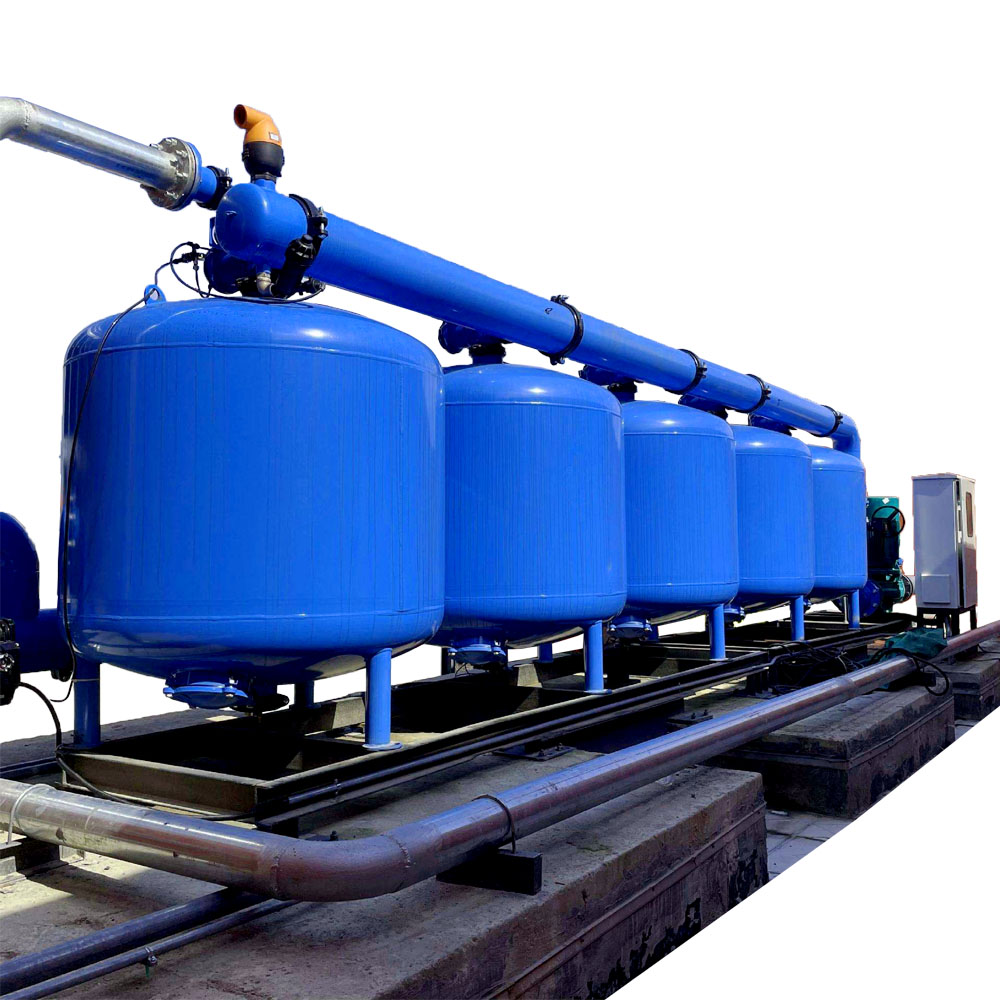
Tag: MBR

MBR reactor
Blog

Why choose MBR to treat wastewater?

1) Stable effluent quality: MBR uses membrane separation technology to achieve efficient solid-liquid separation. The effluent suspended solids content is less than 10 mg/L, and the turbidity is less than 1 NTU. The water quality is clear and transparent and can be directly reused in industrial cooling water and other

membrane bioreactor
Blog

Why to use MBR process?

MBR Process OverviewConventional Activated Sludge (CAS) is widely used in various sewage treatments. Since gravity sedimentation is used as a means of solid-liquid separation, it brings many problems, such as low solid-liquid separation efficiency, low volume load of treatment equipment, large floor space, unstable effluent quality, low oxygen transfer efficiency,

membrane bioreactor
Blog

What are the common problems of MBR?

(I)Membrane surface pollution and blockage 1. Organic pollution Cause: A large amount of organic matter contained in wastewater, such as protein, oil, polysaccharide, etc., is adsorbed and deposited on the membrane surface to form an organic film. These organic substances have strong adhesion and are easy to combine with microbial

MBR reactor
Blog

What’s the differences for MBR, SBR and MBBR?

1.the difference 1)Process principles and characteristics MBR: Combines membrane separation technology with activated sludge method, uses membrane components instead of secondary sedimentation tanks, realizes the separation of sludge retention time and hydraulic retention time, increases activated sludge concentration, and improves effluent quality. SBR: Intermittent activated sludge process, which carries out

MBR reactor
Blog

Most popular wastewater treatment technology

1. Activated sludge technology: Activated sludge technology is a biological method that introduces air into wastewater to allow aerobic microorganisms to multiply and cultivate to form activated sludge with strong adsorption capacity. Biological methods have gradually become the mainstream method of sewage treatment technology. The basic process of activated sludge

activated carbon filter
Blog

What is coking wastewater?

1.Coking wastewater is a typical toxic and difficult to degrade organic wastewater.Sources of coking wastewater‌ Coking wastewater mainly comes from multiple links in the coal coking production process, among which residual ammonia accounts for the largest proportion, followed by wastewater generated by processes such as coal gas purification and chemical

MBR reactor
Case Studies

Zero discharge treatment (ZLD) solution for coal chemical wastewater

I. Project Background and Objectives The coal chemical industry generates a large amount of wastewater in its production process, which contains high concentrations of inorganic salts, organic matter, ammonia nitrogen and other pollutants, posing a serious threat to the environment. In order to achieve clean production and environmental protection, a

membrane bioreactor
Waste water treatment news

What’s the advantages of membrane bioreactor?

Membrane bioreactors (such as membrane bioreactors MBR or biofilter systems) combine biofilm method with membrane separation technology and have the following core advantages: 1. Efficient solid-liquid separation and water quality stability Absolute filtration is achieved through microfiltration membrane components.reduceThe suspended solids (SS) and turbidity of the effluent (usually SS <

MBR reactor
Waste water treatment news

What’s membrane reactor treatment?

The membrane reactor is a highly efficient water treatment technology that combines membrane separation technology with traditional biological treatment processes to achieve water purification and pollutant removal. The following is a detailed introduction to the membrane reactor treatment process. The processing flow of the membrane reactor mainly includes the following key steps: 1.